
Enterprise AI
AI Outbound Calling vs. Human Telesales: Which Steps of a Lead List Go to Each?
Split one lead list by task when buying AI outbound calling. AI handles bulk reach, screening, and standard Q&A. Humans handle objections, pricing, and closing.

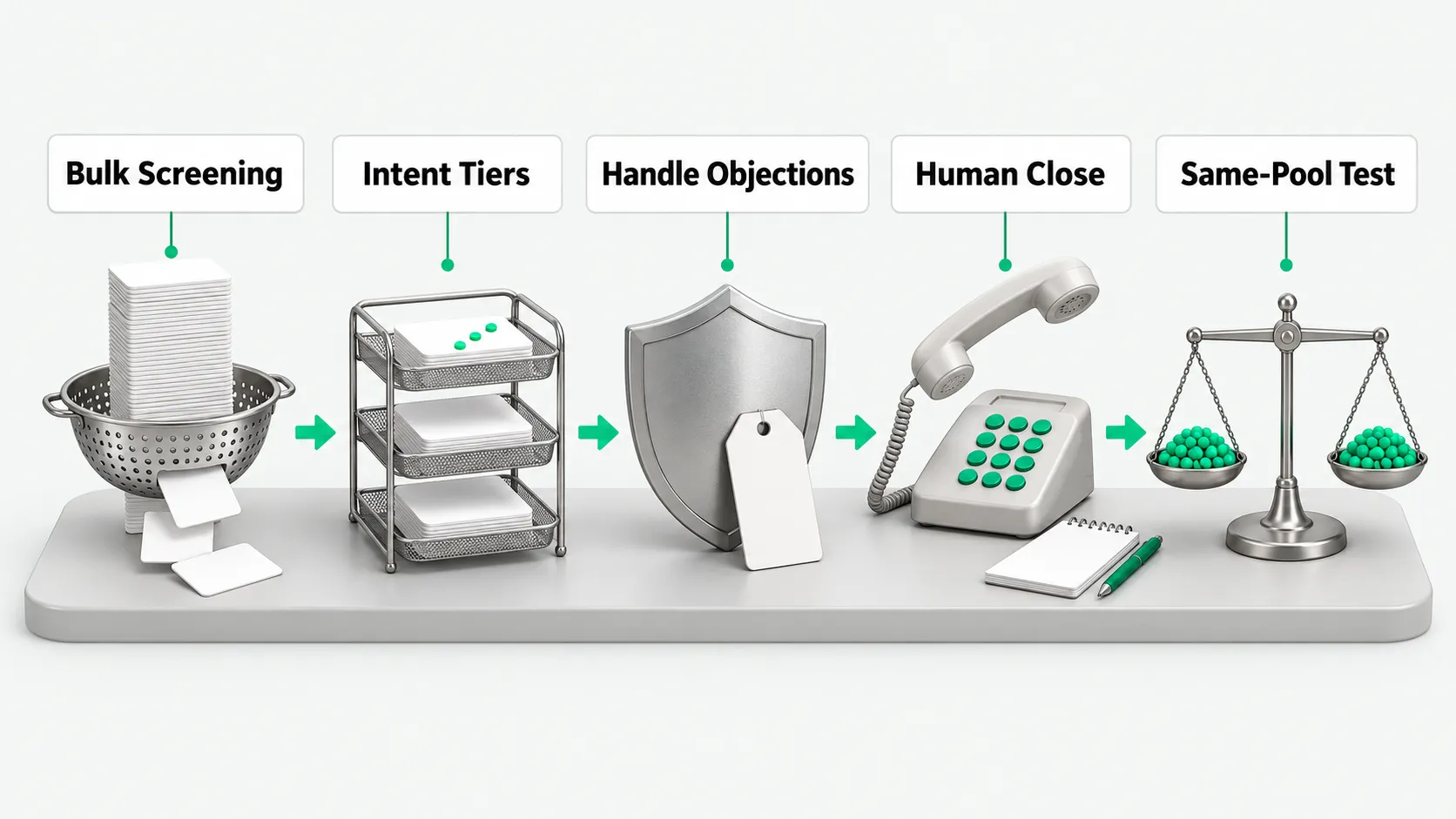
A company buying an AI outbound calling system should split one sales lead list by task type. AI outbound fits the first half, where the rules are fixed and the work repeats at volume: verifying identity in bulk, screening purchase intent, and answering standard questions. Human telesales fits the second half, where reps judge in the moment, handle price objections, build trust, and push the deal to signature. Our view: handing price negotiation to AI outbound can lower conversion. So can keeping human reps on large volumes of dead numbers.
Bulk outreach and screening: confirm identity and intent, let the machine clean the list
Bulk outreach and screening is where AI outbound fits best. New leads include disconnected numbers, wrong numbers, and visitors with no intent. Having human reps cold-dial each one burns hours.
AI outbound can run the standard qualifying steps up front. Once connected, it checks the contact’s identity and purchase intent. Example: a lead just submitted an ad form. AI outbound calls back the same day and confirms that the person on the line submitted the form, whether they plan to buy, and roughly when. For existing customers, AI outbound also runs satisfaction follow-ups and renewal reminders. Human reps stop cold-dialing and follow up only with leads who have stated intent.
The handoff point is lead grading. AI outbound tags each lead from its answers. Leads with a purchase plan go to a high-potential list. Leads who decline are archived. The high-potential list and call summaries sync to the CRM, and the rep who owns that territory picks them up.
Q&A and sending materials: answer standard questions, trigger follow-up documents
For common product questions, AI outbound can answer accurately from the standard Q&A in its knowledge base. Questions raised during screening about supported features, the delivery process, or public pricing have clear answer boundaries. AI outbound pulls the answer from the back-end knowledge base and gives the same answer every time.
AI outbound also handles light document sending. When a contact asks for materials, AI outbound asks for consent, then triggers a text message with a brochure or proposal link and logs the delivery status. During the call it also captures requirement fields such as team size or expected timeline. Complex combinations or custom requests outside the standard Q&A go to human reps.
The handoff point comes after the materials are sent and the requirements are logged. Once the contact leaves custom requirement fields, AI outbound says a consultant will follow up, and the ticket syncs to a human rep.
Objections and negotiation: humans negotiate price and terms, the machine makes no verbal commitments
Price negotiation, discount concessions, commercial terms, and delivery commitments should all stay with human reps. A price objection or a custom payment request touches contract liability. A rep needs to assess the risk and negotiate.
AI outbound cannot make binding pricing moves. It can only state the list price or fixed discounts, and it does not agree to price cuts. For who owns a commitment once an AI makes one, and where the boundary sits, see AI Customer Service Compliance: Who Owns What the Bot Promises?. A human rep can pick up the contact’s real concern. If the contact cares about after-sales support, the rep can adjust the proposal to close the deal.
The handoff point is the moment a lead raises an objection. If the contact asks to negotiate or voices strong doubts during screening, the system detects the intent and routes the call to a human. For the exact point in a call when it should transfer to a live agent, see When Should a Voice Sales AI Agent Hand a Call to a Human?. This note does not cover it. The rep pulls up the summary and continues the negotiation.
Comparison and testing: split one lead pool, compare closed revenue, track running cost and refunds
To measure how AI outbound performs, a company cannot run a loose comparison across leads from different channels or time slots. If high-quality leads go to humans and dormant leads go to the machine, the skewed baseline hides the real result.
Voice Arena has published a draft evaluation methodology. It is still open for comment, and no results have been released. The draft describes this setup: a company sells an online course in the United States. Each day, leads from its ads are randomly split among several commercial AI voice sales systems and three human reps with telesales experience. All participants use the same pricing rules: the list price, a fixed discount ladder, and the refund policy. Participants are ranked by first-order revenue within seven days of lead assignment, excluding sales tax. Running cost is listed separately and does not affect the ranking. The first version does not deduct refunds or chargebacks. AI participants must state during the call that they are AI. When filling out the lead form, the person being called gave prior written consent to receive calls, including AI voice calls. After the person opts out on any channel, all participants stop contacting them.
To measure conversion ability, randomly split leads from the same ad channel and test the machine and the humans on the same list price and discounts. Connection rate alone does not show closed deals.
Our recommendation: when comparing vendors, use this kind of split test and make closed revenue the main yardstick. List line and running costs separately. Keep tracking refunds and chargebacks so that inflated sales scripts do not eat into margin.
Compliance principles: get prior written consent, identify yourself, stop on opt-out
Put the compliance principles into the contract and the acceptance criteria at the time you buy AI outbound.
The principles:
- Get consent in advance. The person being called agrees in writing, when filling out the form, to receive calls including AI voice calls.
- State who you are and why you are calling at the start of the call. Give the company name and the reason for the call.
- Disclose that the caller is AI. Say clearly that an AI voice service is calling. Do not pose as a human.
- Offer a way to opt out, and stop contact on every channel after an opt-out. Once a contact declines or unsubscribes, voice calls, text messages, email, and human calls all stop together.
- Call at reasonable hours. Call only during business hours in the contact’s local time and avoid rest hours.
- Announce recording before it starts. If calls are recorded for quality review, say so at the start of the call.
These principles cover the whole process, from lead capture through outbound calling to opt-out. If opt-outs do not sync across channels, contacts may file complaints.
When buying and launching, write these principles into the acceptance criteria. Confirm the system can announce its identity on its own and can sync an unsubscribe across channels.
AI outbound calling: FAQ
Which sales leads should go to AI outbound first?
Time-sensitive, high-volume leads of unknown intent from public ad channels should go to AI outbound first. Example: a user just submitted a web form. The system calls quickly to verify identity and intent and to clean out dead numbers. Referrals and high-value opportunities go straight to human reps. The machine should not touch them.
After AI outbound finishes screening, what should the handoff to a human rep include?
The handoff ticket should include the intent tag, a Q&A summary, and audio clips of the call. The product modules the contact asked about and their preferred contact times, as recorded by AI outbound, should be stored in the CRM. Before calling back, the rep pulls up the context, follows the contact’s needs, and avoids asking the same questions again.
Once screening goes to AI outbound, how do we measure its real contribution to telesales revenue?
Use a same-source split test. Randomly split one batch of ad leads between a human-only group and a human-plus-AI group. Over the same period, compare the two groups on total signed revenue, output per rep hour, and refunds. The gap shows the net gain that AI screening adds to the business.