
AI Coding
From Coder to Agent Orchestrator: How AI Changes a Developer's Job
AI handles throughput and humans handle judgment. How developer work moves from writing code to system design, agent orchestration, guardrails, and review.
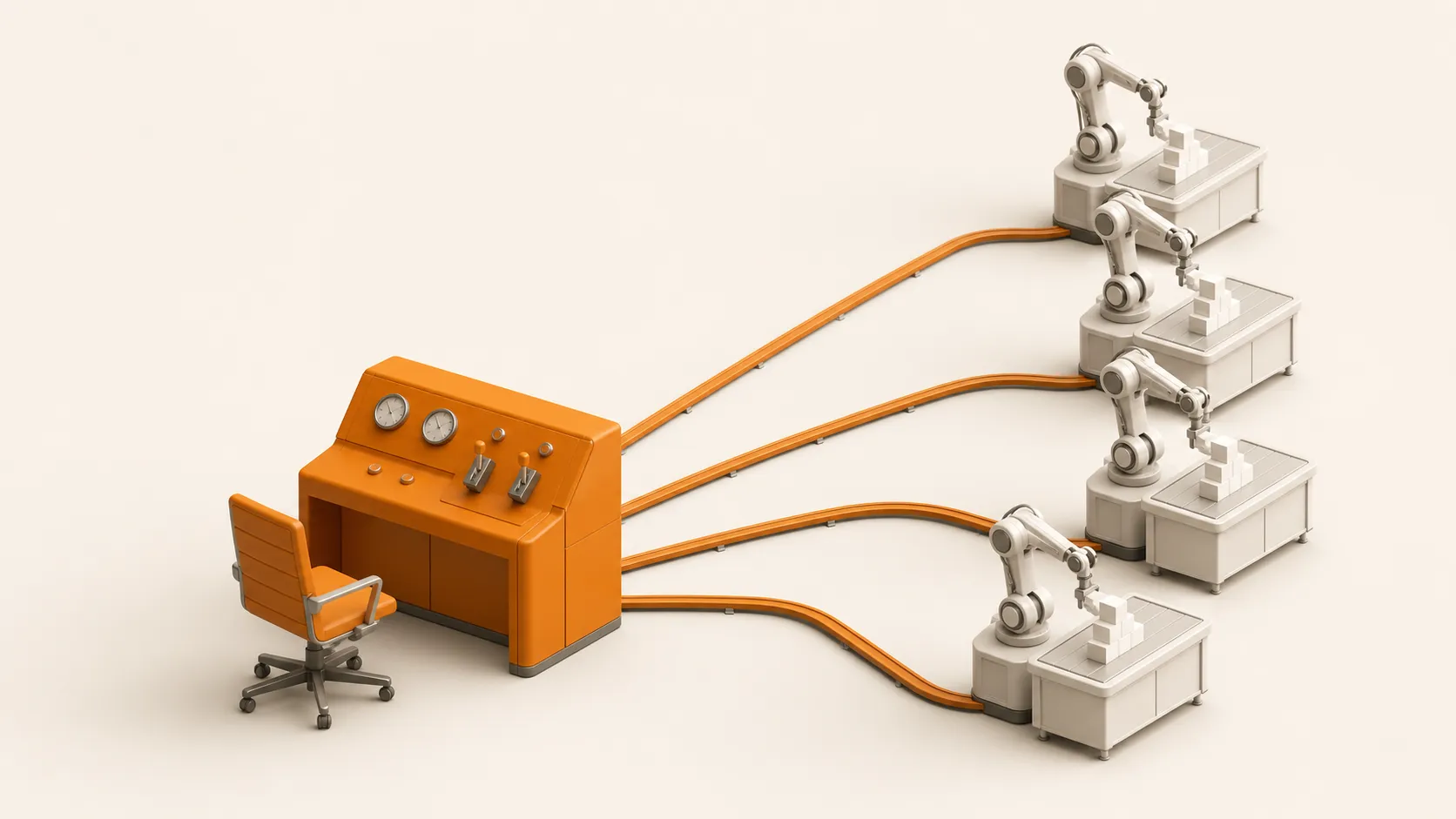
Software development is changing at the base level.
A developer used to earn their keep by turning requirements into code. Output was capped by personal typing and coding speed, so it grew roughly linearly. Today AI can produce pages, APIs, tests, and whole features in a short time. The scarce skills are moving away from coding speed toward four others: defining the goal clearly, drawing clear system boundaries, keeping AI from breaking the architecture, and judging quickly whether a result is usable.
Developers are moving from coder to system designer and agent orchestrator.
AI frees up capacity and multiplies the risk of losing control
AI saves time. It also removes the linear cap on engineering capacity. One developer can start several agents at once, each working on a different task, branch, or sandbox. A prototype that took several days can now run within a few hours.
AI does not follow architectural discipline by default. Without constraints, it produces large amounts of code that runs but is hard to maintain. It rebuilds what already exists, adds dependencies freely, changes the existing architecture without asking, and patches symptoms locally while the system problem stays. The result is a pile of AI slop.
AI can make code production ten times faster. It can make technical debt grow ten times faster too.
So set up guardrails before you let AI work on its own.
The development workflow gets a new order
In traditional development, the editor is where work starts. AI-assisted development runs closer to this chain: CLI → Editor → GitHub.
The CLI starts tasks, delegates them in parallel, and tracks their status. The editor stops being the main production tool and becomes a control board: read code, check diffs, make precise edits. GitHub handles asynchronous collaboration. Agents finish tasks in isolated environments and open draft pull requests. Humans review, edit, and merge.
The core loop changes as well. Humans and AI no longer write code side by side. The loop is:
Define intent → Delegate tasks → Agents execute → Human verdict
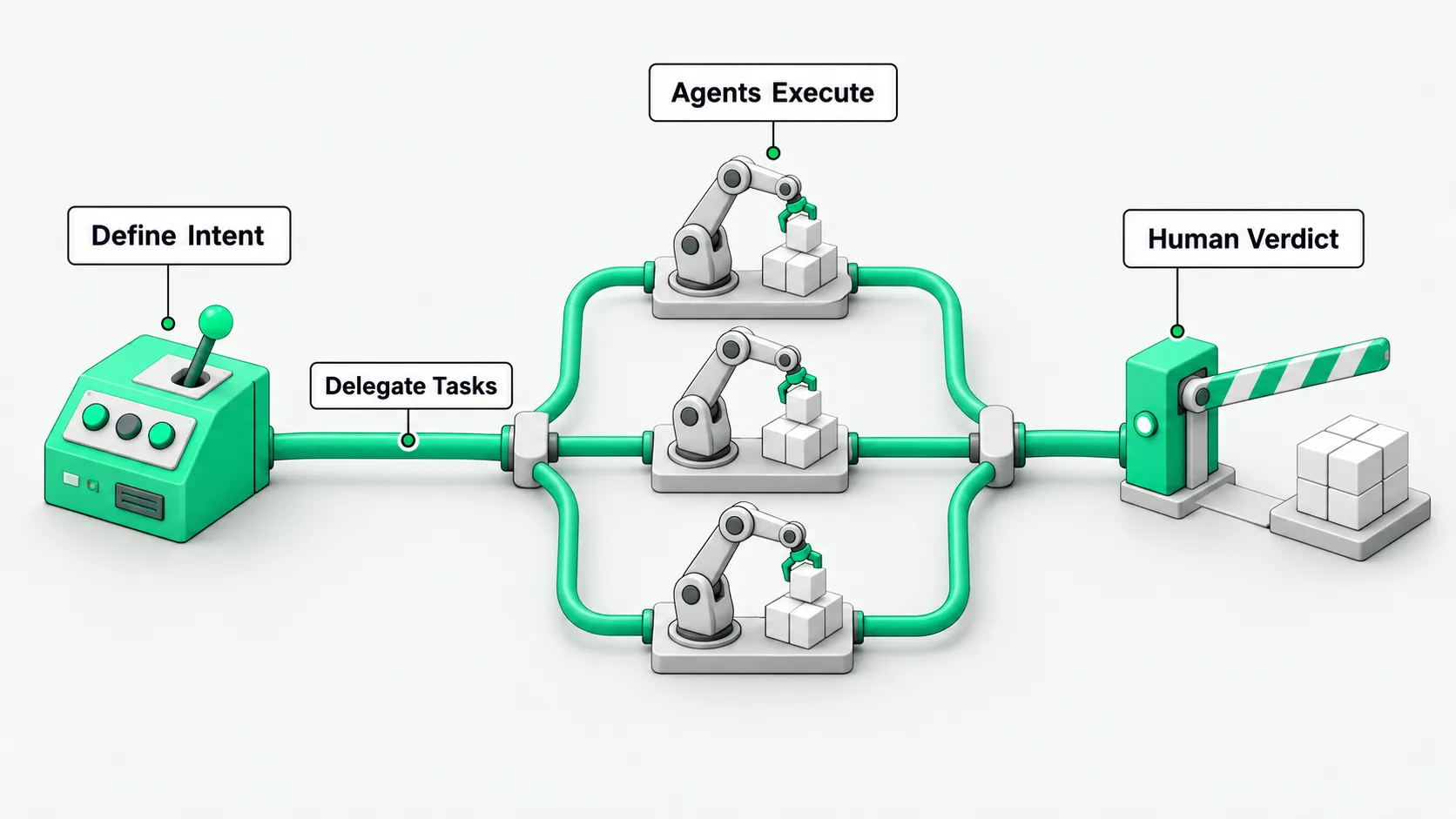
The division of labor in one line: AI handles throughput. Humans handle judgment.
Constraining AI takes three layers
A stable AI development process usually has three layers. Each layer is more specific than the one below it.
Layer one is agents.md. It acts as the repository’s constitution. It defines project goals, architecture principles, and prohibited actions, such as “Do not change the core architecture without approval” and “Do not add new infrastructure dependencies.” It does not say how to do a task. It sets what must never happen.
Layer two is Skills. Frequent development actions become fixed recipes: adding an API, writing tests, running a database migration, wiring up logging. The AI follows the recipe, which leaves less room for improvisation.
Layer three is custom agents. Each agent has a defined role: backend security, performance tuning, test repair, documentation upkeep. They connect to external tools through MCP (Model Context Protocol) so they can carry a task from start to finish.
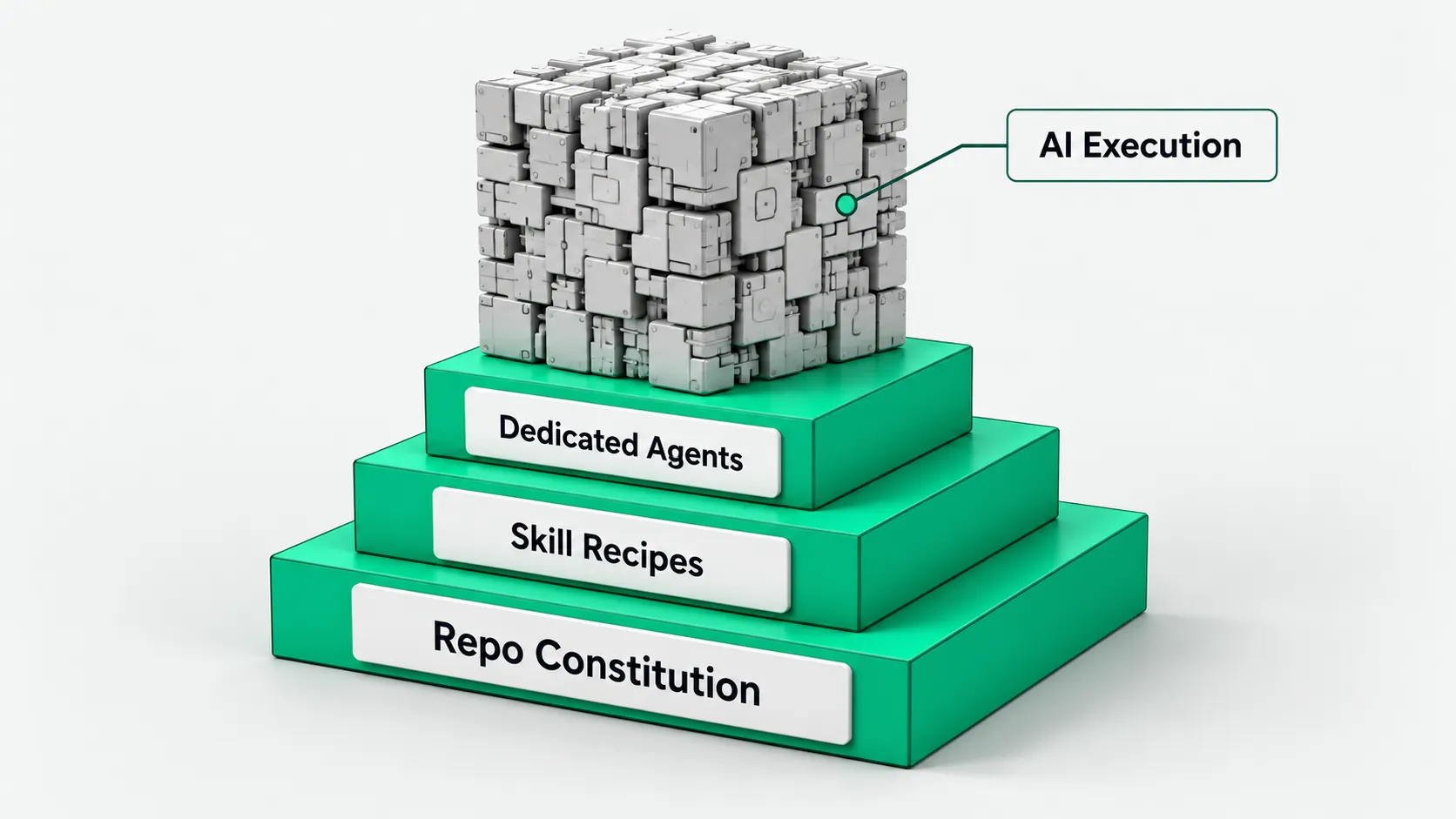
All three layers do one job: keep what the AI can do inside a controlled track.
From slide-deck proposals to working demos
AI also changes how engineering teams communicate.
The cost of going from idea to prototype has dropped sharply. Many concepts no longer need a dozen slides of explanation first. Ship a demo that runs. Decision makers who see a real product decide faster on four questions: Does the direction hold? Does the experience make sense? Is the technical complexity manageable? Is it worth more investment?
Engineering collaboration is shifting from proposal-driven to results-driven.
Engineering judgment still matters
AI will take on more and more code generation. It will not replace engineering judgment. The scarce skills remain problem abstraction, architecture design, technical trade-offs, boundary definition, quality review, and risk control.
Writing code by hand was like cutting a tree with an axe: slow, with limited damage if you slip. AI is closer to a chainsaw. It is much faster, and it does much more damage when it gets out of control.
The best developers in the AI era know what to write, what not to write, and how to keep machines working inside the right boundaries. The volume of code they write is a poor measure.
A developer’s value is moving from code production to system design and engineering governance.
Baize AI works on that second part: designing intent, boundaries, roles, and review gates so that AI throughput runs inside a controlled structure.