
Enterprise AI
AI Hard Hat Detection Raises an Alarm. Remind or Penalize?
An AI hard hat alarm is a lead to check, not a penalty. A safety officer reviews the video first. Response follows job risk. Appraisal and fines stay separate.
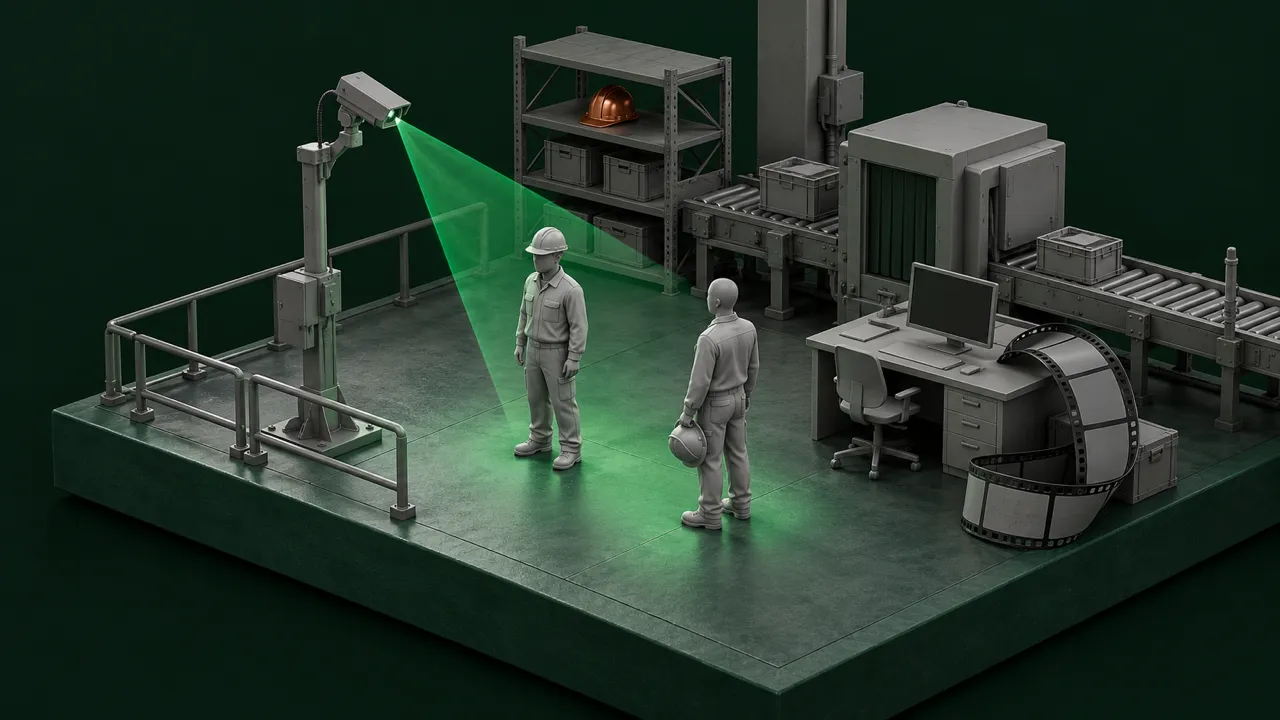
An alarm from AI hard hat detection is only a lead for on-site management. It cannot turn straight into a penalty notice. A safety officer first reviews the video before and after the capture. If the alarm is confirmed, the response is a reminder or an escalation by risk level, and performance appraisal and fines follow two separate tracks. A company’s hard hat management starts with supplying qualified protective equipment as the law requires and with routine training and supervision. Before capture is switched on, the company tells employees the detection scope and the appeal channel. Every case keeps records of the human review, the notice to the employee, and the hearing of the employee’s response.
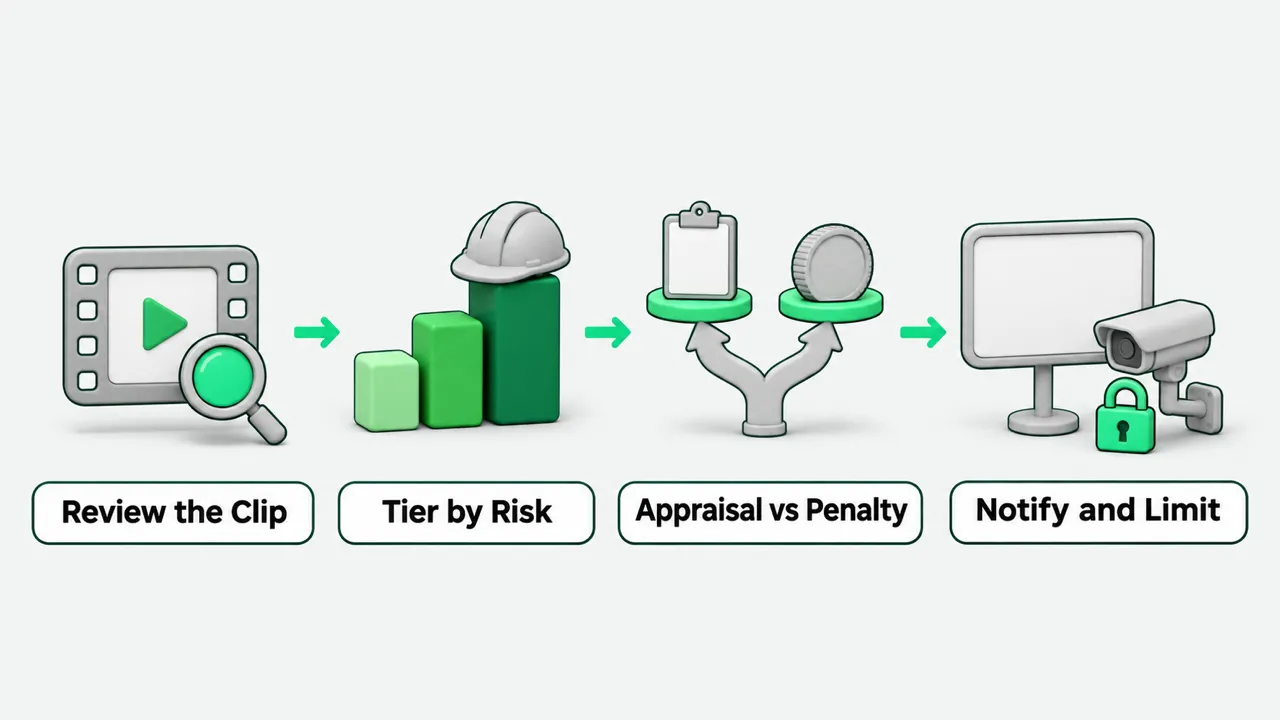
What to review first after an alarm
When visual safety monitoring in the workshop raises a no-hard-hat alarm, the first step is for the safety officer on shift to pull the continuous video before and after the capture point and review it. Beams and pipes blocking the view, a reflective hard hat close to the background color, or a frame caught while an employee bends to tie a shoe or wipe sweat can all be misjudged by the algorithm as not wearing one. For why a machine’s judgment still needs a person to look again, see AI Customer Service Auto-Close: Why Tickets Still Need Human Review. After watching the video, the safety officer first removes false alarms caused by detection errors and blocked views. The officer does not convert alarms into violation tickets with one click in the admin console.
An alarm for an employee taking off a hard hat in the workshop rest area is also checked condition by condition. It is not counted as a violation, or as no violation, across the board. It is not a violation only when all of these hold: company rules clearly list the rest area as a place where a hard hat is not required, the electronic fence configurable in the visual safety monitoring excludes the area, the employee was not working at the time, and the area is not within the range of hazardous work such as lifting. If any condition is not met, the company rules decide. For a confirmed record, the safety officer notes the location, time, and on-site process before passing it on.
When to remind and when to escalate
When human review confirms that someone was not wearing a hard hat properly, the workshop responds in tiers based on the hazard level of the employee’s process and how often it happens. If it is the first time, the employee puts the hat on right after a reminder from the team leader or the public address system, and the employee was not in a hazardous process such as work at height, lifting, or hot work, the team leader gives a verbal reminder on the spot. After the correction, the team leader notes it in the team safety log for reference and does not escalate it.
If the same employee or the same team fails to wear hard hats as required several times within the period the company sets, or someone in a high-risk area for work at height, lifting, or hot work still does not wear one after a reminder, the safety officer escalates the record to the workshop director and the safety supervisor. The workshop director and the safety supervisor meet with the person. Depending on the situation, they may suspend the person’s work for that shift, and arrange retraining. The person returns to work after passing the assessment. If the confirmed capture shows an outside contractor doing construction or maintenance on site, it does not go into the plant’s internal employee log. The safety officer and the business contact hand it to the contractor’s company under the safety management agreement both sides signed.
How appraisal and penalties stay separate
When accountability follows, performance appraisal and fines run on two separate tracks. Article 45 of the Work Safety Law requires a business to provide employees with labor protective equipment that meets national or industry standards, and to supervise and train employees to wear and use it according to the rules of use. Article 57 states that employees shall correctly wear and use labor protective equipment during work, carry out their job safety duties, follow rules and operating procedures, and accept management. The company first supplies qualified hard hats and does the training and supervision. That is the compliance basis for any later on-site management.
In practice, each track follows its own rules.
- Performance appraisal track: deducting safety performance points from a team or person, or removing eligibility for monthly or annual awards, follows the performance appraisal policy the company has already published. The workshop and the safety department check the facts and then record it.
- Fine track: whether a fine can be imposed, and how, depends on national and local laws and regulations and on rules the company has lawfully made and published. HR and legal confirm it together before launch and during enforcement. The workshop and safety officers do not set fine amounts themselves.
On either track, an algorithm alarm cannot produce a result directly. Every case needs human video confirmation, formal notice to the employee, a channel for the employee to respond, and a record of how the response was checked. This keeps the facts clear and the procedure complete.
How to handle monitoring notices and captured data
Before the workshop switches on visual safety monitoring, management actions come first. The union, HR, and the safety department work together to give employees real notice. Clear monitoring signs go up in areas the cameras cover. The employee handbook or a dedicated policy states the detection scope, the rules that trigger a capture, what the images and records are used for, and the appeal channel and contact person for employees who think a capture is wrong. Do not roll out across the whole plant before review, notice, and appeal rules run smoothly in one workshop. For how to set governance rules before scaling up, see AI Agent Security Governance Must Come Before Scaling.
Captured images and video clips show employees personally, so admin permissions and retention periods follow the principle of minimum necessary access. In daily work, only the safety officer for that area, the workshop director, and managers involved in disciplinary review can view the matching records. Unrelated roles get no viewing or export access. Clips removed as false alarms and footage archived after review are deleted under the retention period the company sets. They are not kept indefinitely, and capture screenshots are not posted in unrelated large group chats to name and shame anyone. If the detection system also matches faces to identify people, faces are sensitive personal information. Legal assesses this separately under the Personal Information Protection Law before it is enabled.
AI hard hat detection: FAQ
An employee takes off a hard hat to drink water in the workshop rest area and gets captured. Is it a violation?
It depends on whether the site and the rules meet all the conditions. Company rules clearly list the rest area as a place where a hard hat is not required, the electronic fence configurable in the monitoring excludes the area, the employee was not working at the time, and the area is not within the range of hazardous work such as lifting. Only when all are met is it not a violation. Otherwise, the safety officer reviews the video and judges it under company rules.
An outside construction crew enters the workshop without hard hats and triggers an alarm. Can the workshop deduct pay from individuals under plant rules?
Outside contractors usually have no direct employment relationship with the plant, so the plant’s internal pay and appraisal rules for its own employees do not apply to them directly. The case is handled under the safety management agreement both sides signed. After the safety officer confirms it, the officer first stops the violation and requires the hard hats to go on at once. In a high-risk process, their work for that shift can be suspended. The responsible department then holds the contractor’s company accountable under the agreement, using the reviewed video record.
Can a screenshot from visual safety monitoring serve directly as grounds for a penalty?
No. A single still image captured by visual safety monitoring cannot be the only grounds for a penalty. A blocked view, a detection error, or an area boundary problem can all cause a false alarm. Before any action, the safety officer pulls the video before and after and reviews it, and confirms that the location is an area where a hard hat is required. The employee is then notified and heard, and the case is finally handled under rules the company has lawfully made and published.