
Enterprise AI
When an AI Agent Drafts Your Bid, Who Guards Against Disqualification?
Companies use bid agents to help prepare tender responses. One mistake on a mandatory clause disqualifies the bid. The agent lists disqualification risks and drafts responses. Commercial and technical staff check each item against the tender documents. People approve the price, the original credentials, and the signed submission.

A bid for a large project often runs to a thick volume. A bid agent can read the tender documents, extract the mandatory requirements, and draft response sections. That saves the team overnight sessions spent on layout and searching for material. A bid is different from ordinary copy. A credential certificate missing a company seal, one missing signature on a consortium agreement, or one line item over the price cap in the quotation table can get the whole bid rejected on the spot. All the preparation is then wasted. The algorithm can organize the text. The company still needs firm handoff rules: who checks each original credential, who sets the final price, and who signs and seals the commitment letter before submission.
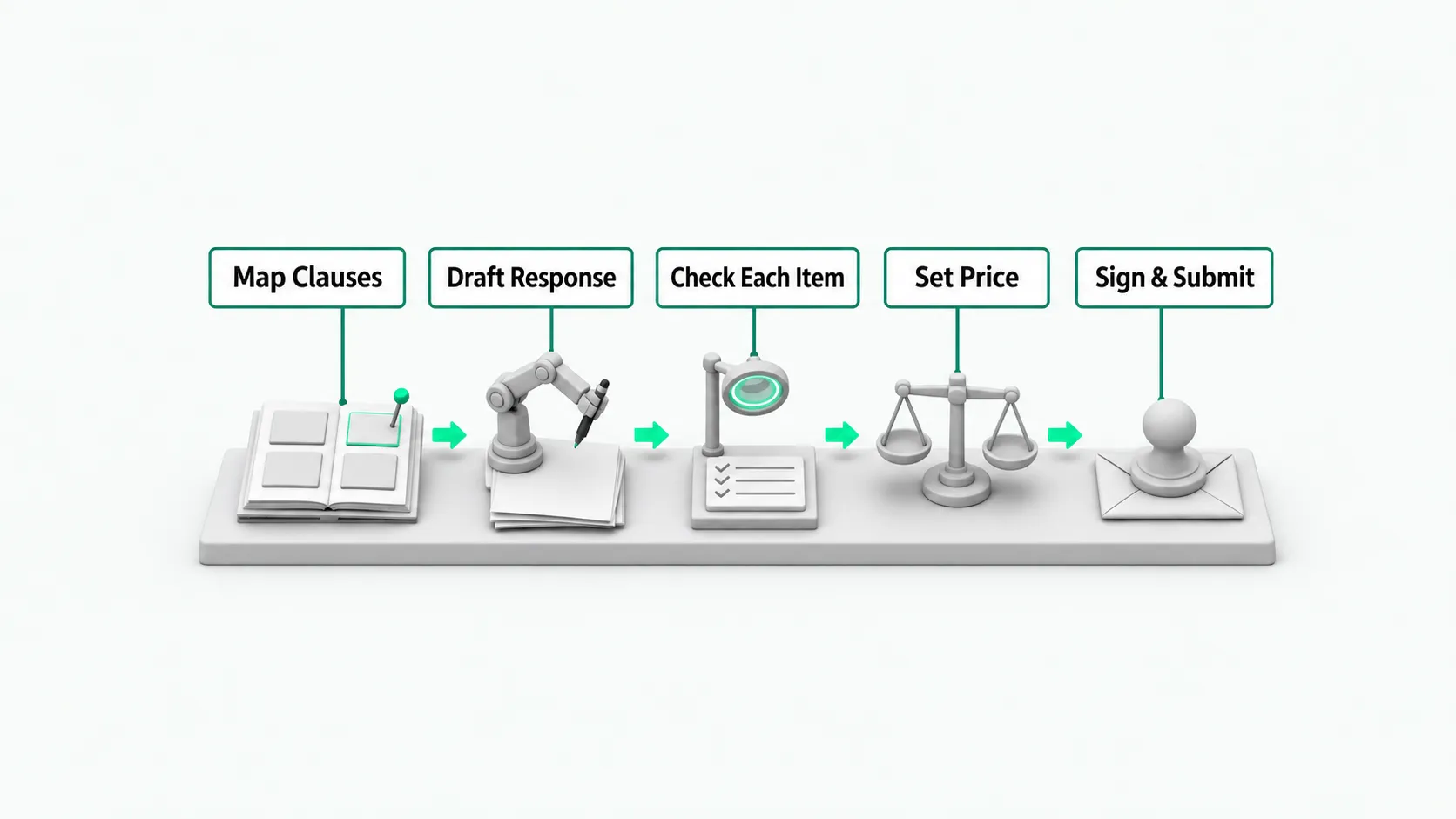
Parse the tender documents: extract mandatory requirements and disqualification risks
The agent loads the electronic tender documents and parses the bid data sheet, contract terms, evaluation method, and technical specifications. It focuses on clauses marked with an asterisk as mandatory, limits on consortium bidders, the number of years of audited financial statements required, the number of similar past projects required, and the binding and sealing rules for the bid. The system produces a list of disqualification risks. Each risk sits next to the chapter and page number of the tender text it comes from.
The commercial lead takes this list and runs a first screen against the paper originals or the electronic tender notice. If the agent flags that a past-project requirement needs a specific qualification grade, a commercial specialist logs in to the company’s credential library and pulls the certificate number and past award notices. For ambiguous clauses, commercial staff prepare a clarification request early and submit it on the tender platform before the deadline.
Assemble the first draft: generate the technical proposal and commercial response
The system reads the screened risk list and pulls matching content from the company’s project case library, product specification library, and standard templates. It follows the chapter order the tender documents require and drafts the commercial bid, technical bid, and service plan chapter by chapter. For long sections such as staffing, the construction organization plan, and the quality assurance plan, the system takes the best paragraphs from past winning bids for similar projects and assembles and edits them.
The agent cites the source document for each technical paragraph it generates, so engineers can trace the original. For the specification deviation table, which must be filled in line by line, the program puts each tender parameter next to the company’s measured product data. It fills in a first pass of “compliant” or “positive deviation” and leaves open items for people to confirm.
Check each item: verify credentials and format against the list
After the technical and commercial drafts exist, the chief engineer and a senior commercial specialist cross-check them. The technical lead checks that product parameters actually meet the requirements, and that deviation notes match the drawings and the measured values in test reports. When a company automates analysis and sets the boundary for human checks, see AI Agents in IT Change Review: Which Steps Still Need a Human Sign-Off?.
The commercial specialist checks each document: business license, work safety license, power of attorney from the legal representative, audited financial statements for recent years, and proof of social insurance payments. The specialist checks that seals on the scans are clear, that the entity name on the seal exactly matches the bidding entity, and that the authorized signer signed within the validity period of the authorization. The two reviewers go through the disqualification risk list and tick and sign each item, on paper or in the review system.
People approve the price: lock the floor and the exceptions
The cost engineer and the sales lead calculate and finalize the bill of quantities and the itemized equipment quotation themselves. The system can estimate material costs from historical data and model a gross margin range. Discount strategy, tolerance for payment terms, and room for concessions involve commercial interests, and the agent has no authority to set the final total or unit prices.
The cost engineer imports the approved unit prices into the system. The program calculates the total, taxes, and the amount in words, and checks that rounding has not introduced errors of a few cents inside the table. The sales lead confirms that the total does not exceed the maximum bid price published in the tender documents, and signs the price approval form by hand. The price is now locked.
Seal, sign, and submit: confirm the version and bid on time
After every chapter passes review, the commercial specialist imports the final files into the electronic seal system. The specialist checks that the electronic seals on the bid commitment letter, the power of attorney, and the price summary sit inside the dashed boxes the tender documents specify. For controls on automated outbound output and sign-off, see Which CRM Outbound Agent Emails Need Human Approval Before Sending?.
A dedicated bid administrator runs a hash check on the final files to confirm that the uploaded version matches the approved version. For paper submissions, a named person packs and seals the bid as required and applies a seal across the page edges. For electronic bidding, an authorized commercial specialist inserts the company’s certificate hardware key and completes the encrypted upload before the deadline. The system only handles countdown reminders and receipt downloads. A person always performs the submission on the spot.
Bid agents: FAQ
If the tender documents contain hidden ambiguous clauses, will the bid agent miss a disqualification risk?
The algorithm handles clearly structured asterisk clauses well. It can misread conditions written in less obvious ways. Some tender documents scatter hard limits across special contract terms or drawing notes, or use sentences with two possible readings. In these cases the commercial team must not trust a “no issues found” result from the system. An experienced bid specialist must read the full tender documents. If the specialist finds contradictory statements in drawing details or in payment and penalty terms, they should send a clarification request to the tendering party at once and use the formal written reply as the basis for the bid.
Why must the final price and discounts never be left to the bid agent?
The bid price is the core of commercial competition. It involves the company’s cash flow floor, strategic customer relationships, and delivery margin. The algorithm reasons from past data. It cannot know how full a competitor’s production capacity is right now, recent budget changes on the owner’s side, or where raw material prices are heading. Handing pricing authority to the algorithm can lead to irrational low bids, even below cost, and losses during delivery. The company should use the price model as decision input. The sales director and the company head decide the final discount together.
When a bid agent helps draft the bid, who confirms key technical deviations and the response table?
The project technical lead and the solution architect sign off on key technical deviations and the response table. After the bid agent drafts the parameter comparison table and suggests a first compliance status, the technical lead pulls the product type test reports and drawings and checks that measured data supports each stated parameter. For non-critical parameters the product cannot fully meet, the architect assesses whether a negative deviation would disqualify the bid, and records the alternative and an explanation in the deviation table. The response table goes into the formal bid only after the technical lead and the quality director both sign.